

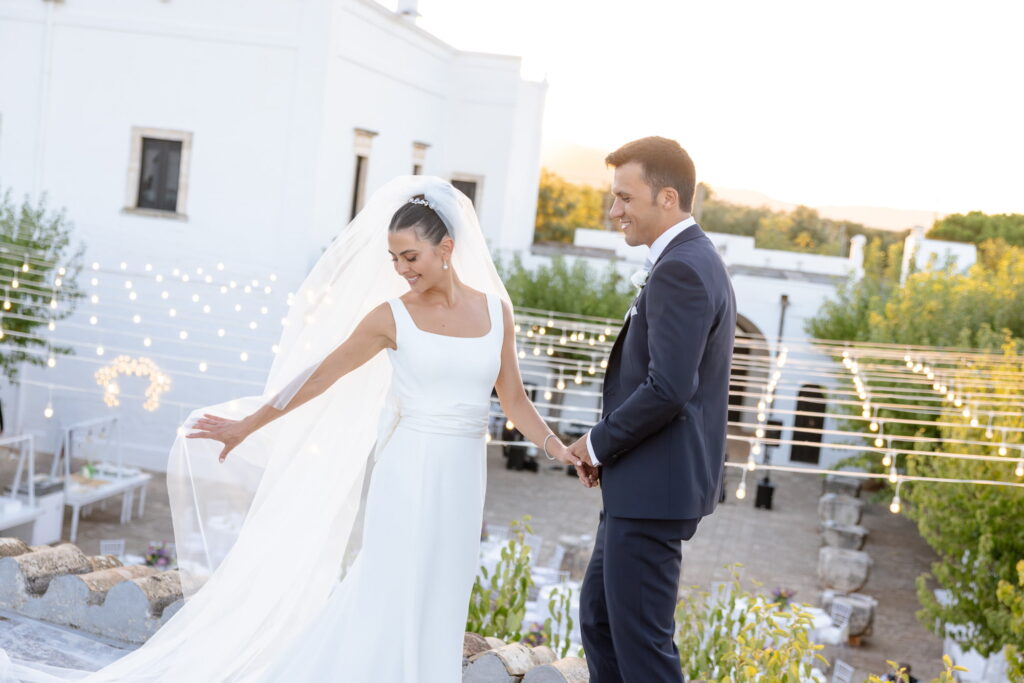
When planning a destination wedding in Italy, choosing the date and venue is often the top priority. However, there is an invisible yet incredibly powerful element that determines the aesthetic success of your candid photos: the light.
As a destination wedding photographer in Italy, my job isn't just to take pictures, but to "read" the light. To be clear: anything is possible. A professional must handle every situation in the best way, but choosing specific times based on the sun's movement is a smart choice that will reward you with extraordinary images and a much more relaxed experience. In this guide, we will explore how to build the perfect timeline to guarantee the kind of candid photos you dream of,avoiding the technical errors that can ruin the atmosphere.
The Risks of a "Morning Wedding" (Especially in the South of Italy)
In Italy, particularly in southern regions like Puglia, Sicily, or Campania, the summer sun is incredibly intense. Many couples are drawn to the idea of an all-day event, starting with a ceremony at 11:00 AM. However, from a comfort standpoint and for capturing genuine candid photos, this choice hides several risks:
- Excessive Heat: Celebrating outdoors at noon under the July sun can easily become a test of endurance. The heat affects the longevity of your makeup, the freshness of the flowers, and, above all, the mood of the couple and guests, making it harder to capture those relaxed, candid photos.
- Harsh, Midday Light (Zenithal Light): When the sun is directly overhead, it creates deep, dark shadows in the eye sockets and under the nose. This is the least flattering light possible for your destination wedding in Italy; it flattens features and forces everyone to squint, making it incredibly difficult to capture natural candid photos.
My advice: For a summer destination wedding in Italy, an afternoon ceremony is the winning choice. Starting between 4:00 PM and 5:00 PM allows you to take advantage of dropping temperatures and a lower, golden light that is perfect for capturing beautiful, candid photos.
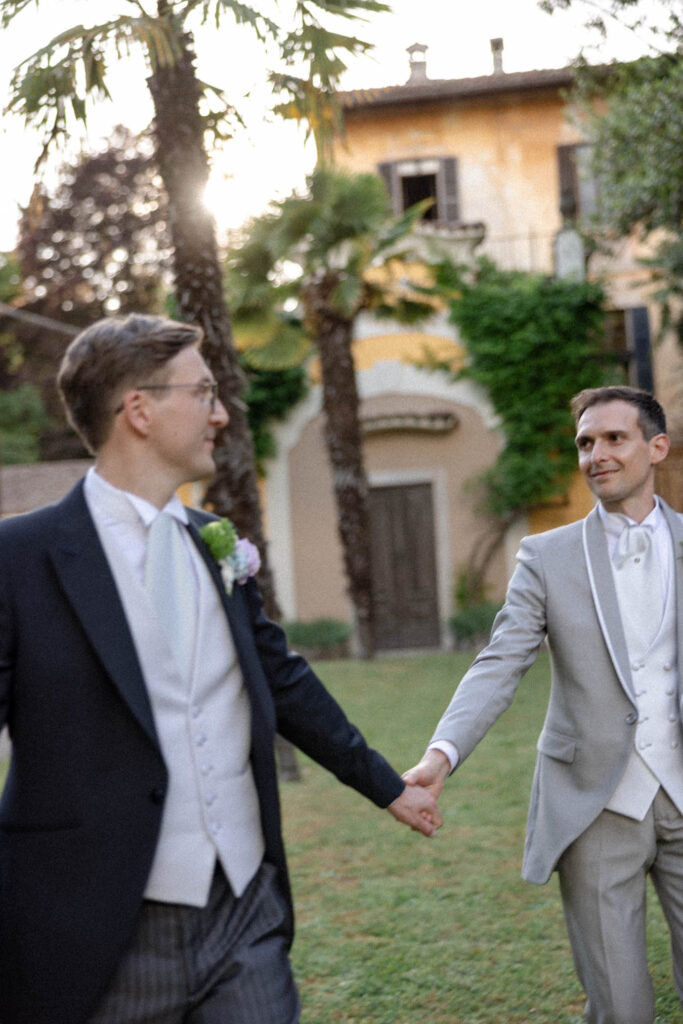
Light Across the Seasons: When Does the Sun Set for Your Destination Wedding in Italy?
To plan your timeline for a destination wedding in Italy, we need to look at the calendar. The sun changes its "closing time" drastically throughout the seasons, directly affecting when we can capture those perfect candid photos:
- Spring (April-May): The light is crisp and fresh. Sunset occurs between 7:30 PM and 8:30 PM. It is the perfect period for early afternoon ceremonies during your destination wedding in Italy.
- Summer (June-August): Days are very long, and the sun sets late (even as late as 9:00 PM). For this season, postponing the ceremony is vital to avoid harsh afternoon light and ensure natural, candid photos.
- Autumn (September-October): The light is warm and amber all day long. Sunset comes earlier (6:30 PM - 7:30 PM), which allows for an earlier dinner while still capturing beautiful candid photos.
- Winter (November-February): Here, the logic reverses. The sun sets around 4:30 PM. In this case, a morning wedding is a must if you want portraits and candid photos in natural daylight.
A Beautiful Trend: The "First Look" for Your Destination Wedding in Italy
If your ceremony is scheduled at a less-than-ideal time, or if you want to fully enjoy the cocktail hour with your guests, you should consider a First Look. This is a private moment, about an hour before the ceremony, where you see each other for the first time alone, creating the perfect intimate setting for genuine candid photos during your destination wedding in Italy.
- Photographic advantages: We can shoot your couple portraits in a better, more flattering light during your destination wedding in Italy.
- Emotional advantages: It is a moment of incredible spontaneity, emotions explode, and the smiles are at their most genuine. It is the ideal opportunity to capture candid and authentic wedding photos, before the chaos of the party begins.

Not Just About the Pictures: Your Guests' Wellbeing During a Destination Wedding in Italy
Planning your timeline around the light also means taking care of your loved ones. Harsh, direct light during a destination wedding in Italy means guests will be searching for shade instead of enjoying the ceremony, making it much harder to capture those relaxed, authentic candid photos.
- Shade Zones: If the ceremony absolutely must take place while the sun is still high, ensure that the altar and seating areas are covered or naturally shaded by large trees. This not only keeps everyone cool but also softens the lighting, allowing for beautiful, even exposures without the harsh contrast of direct sunlight.
- The Cocktail Hour: Place the aperitif buffet in an area where the light is already soft and filtered. This naturally encourages people to mingle and relax, allowing me to capture spontaneous, elegant photos of your friends and family enjoying themselves, without anyone looking overheated or uncomfortable from the glare.
The Sun Begins to Set: The heart of the photographic service
When the sun begins to set, the light becomes soft and no posing is needed: whatever you do, it will look beautiful. During this phase, I always ask the newlyweds to step away for just 15 minutes. It is a moment of decompression after the emotion of saying "I do." It is not just a photo session; it is a moment where you realize you are husband and wife, while the Italian sun gives you its best colors.
"Plan B" and the Light of the Rain
And what if it rains? Don't worry. A cloudy sky acts like an immense diffusion panel. The light is even, features are soft, and the colors of the flowers turn out incredibly saturated. Even on a gray day, the timeline remains fundamental: cloudy light fades faster than clear light, so portraits should not be postponed too much.
FAQ – Timeline and Light
- Q: Can we take our couple portraits during the cocktail hour? A: Absolutely. It is the ideal time because the light is perfect and you are already relaxed. Just 15-20 minutes are enough so you don't miss the party.
- Q: What happens if the ceremony ends when it is already dark? A: We will use a balanced flash technique or, if possible, take advantage of the blue hour (that moment right after sunset when the sky is a deep blue). The atmosphere will be more "glamorous" and sophisticated.
- Q: How do string lights affect the evening timeline? A: String lights are essential for giving depth to the dinner photos. They provide a luminous background even after the sun has gone down, creating a wonderful contrast with the lighting I will use for you.
Conclusion: Let Yourself Be Guided by the Light
The timeline is not a limitation, but a map to achieve the best result. Trusting your photographer's advice on time management is the first step toward having splendid images that truly tell your story.
However, remember that managing the light is only one of the aspects to consider: to discover the other fundamental questions to ask and to avoid making mistakes in your search, take a look at my guide on how to choose the perfect wedding photographer for you.
Are you planning your wedding and want to understand how to fit the different moments together to get splendid photos? Write to me! We will study the perfect timeline together for your location and season.